



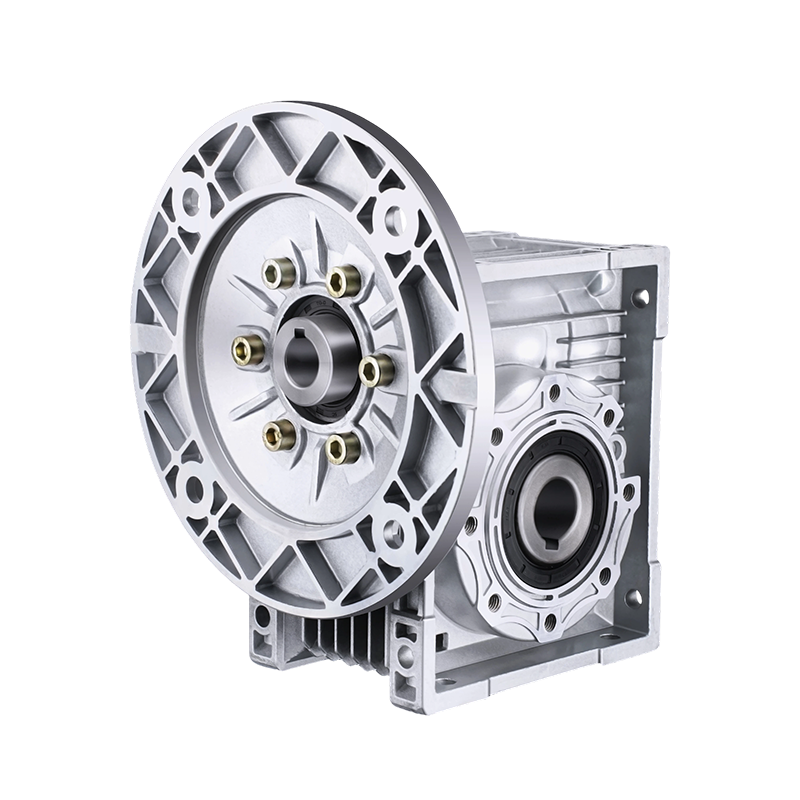
Single-stage Worm Gear Reducer
Adopts high-quality aluminum alloy die-cast casing, featuring lightweight and aesthetic appearance, compact structure, small volume, light weight, space-saving installation, and corrosion resistance.
Excellent heat dissipation performance, safe and reliable operation, and high transmission efficiency.
High load-bearing capacity, stable transmission, low vibration, and low noise.
Equipped with multiple connection structures for power input and torque output to meet various connection requirements; the casing shape design and foot hole layout adapt to multiple installation methods with strong universality.
Small and medium-sized casings adopt fully enclosed structure with strong sealing performance, ensuring that the lubricating oil inside the casing is not easy to loss or deteriorate, no need for replacement, and easy to maintain.
Two-stage Worm Gear Reducer
Composed of single-stage worm gear reducers, it has all the advantages of single-stage worm gear reducers and can achieve a large transmission ratio.
Common two-stage combined models are: 25/30, 25/40, 30/40, 30/50, 30/63, 40/75, 40/90, 50/110, 63/130, 63/150. If users have special requirements, they can select 25, 30, 40, 50, 63, 75, 90, 110, 130, 150 as combination units for separate combination according to actual needs.
Selection Method
To select the NMRV worm gear reducer correctly, users are requested to first understand the following points:
Load conditions
Operating speed range or speed ratio (ultra-low output speed can be obtained by combining with two-stage reduction)
Working operation conditions and environment (temperature, humidity, corrosion, etc.)
Installation space
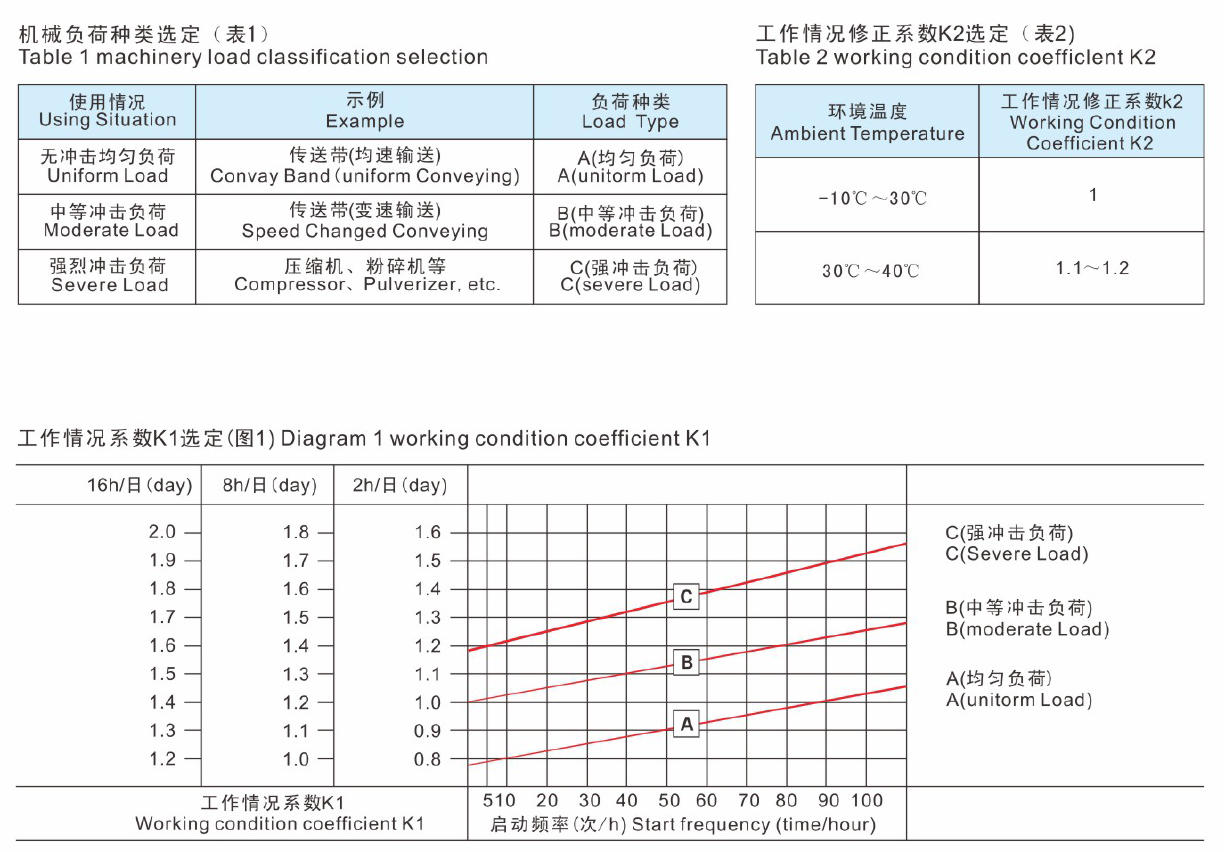
Determine the working condition factor K1 and the working condition correction factor K2
Determine the mechanical load type A, B, C according to Table 1.
Obtain the working condition factor K1 from Figure 1 according to the operating time (hours/day) and starting frequency (times/hour).
Check the working condition correction factor K2 according to Table 2.



follow Us


Four Series Helical Gear Reducer
High Precision Planetary Reducer
 E-mail
 Address
Screenshot and scan the QR code
WeChat QR code
(Click to copy WeChat QR code)
Screenshot and scan the QR code
QR code
(Click to copy WeChat QR code)
Screenshot and scan the QR code
QR code
(Click to copy WeChat QR code)
Screenshot and scan the QR code
QR code
(Click to copy WeChat QR code)